
From Requests to the Real Problem
Teams often move quickly to deliver what customers ask for. But when requests are taken at face value, teams risk solving the wrong problem. Misalignment happens when solutions are prioritized before the underlying workflow and constraints are fully understood.
In this project, the team was responding to a clear request from customers to add notifications for teachers. On the surface, it sounded straightforward. But across feedback, there were also signals that teachers did not want more interruptions or distractions during the day. Something did not add up.
I was brought in to help the team step back, understand what teachers were actually trying to manage in their day to day work, and align on the real problem before committing to a solution.
How I build understanding
Alignment required looking beyond the initial request and bringing multiple perspectives together.
To understand what was really happening, I worked across several inputs:
Conversations with sales and customer support to understand how customers were describing their challenges and what they believed teachers needed
Analysis of existing customer feedback to identify patterns and contradictions in requests
User interviews with infant teachers and directors to understand classroom routines, handoffs, and compliance needs
Deep walkthroughs of how care tasks were tracked during the day, including what happened during breaks, shift changes, and float coverage
Review of how the software was currently being used, including differences in login patterns and shared responsibility
This work helped surface where assumptions had formed and where they no longer matched classroom reality.
A real example
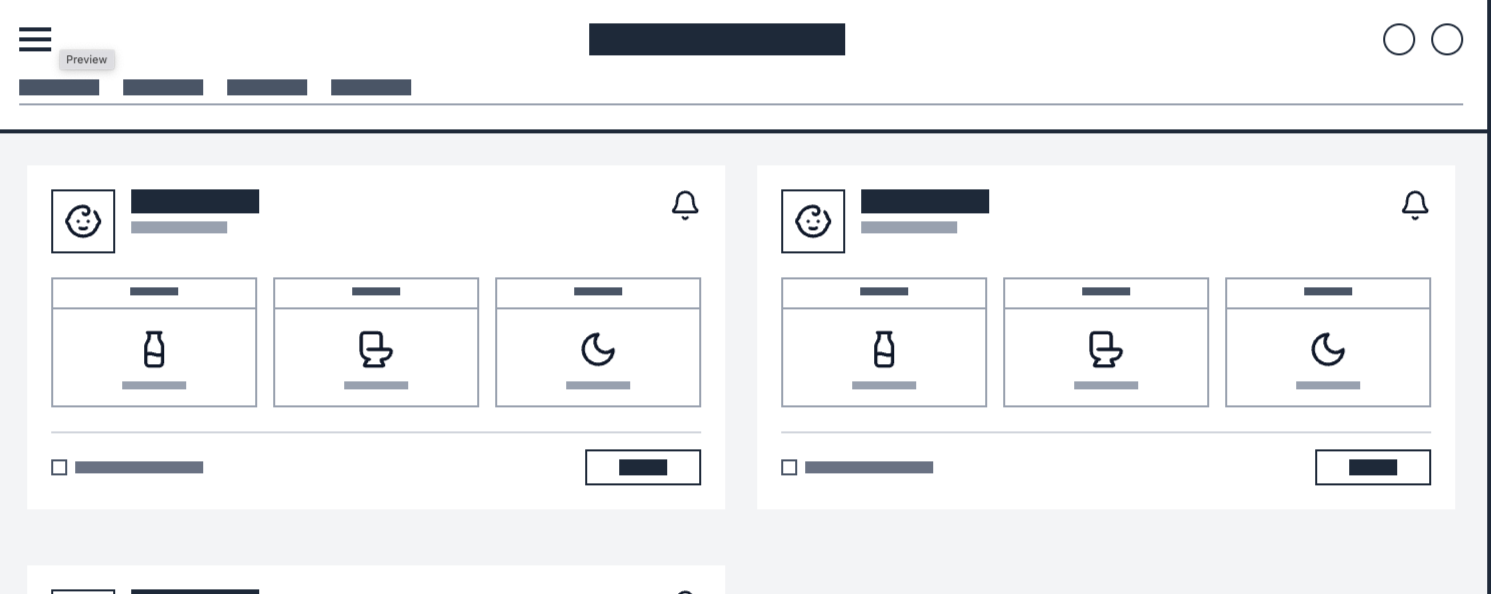
The team was initially told that teachers needed notifications for when a child required a bottle, diaper change, or nap check.
When we observed classroom workflows more closely, a different picture emerged.
Infant teachers were already managing frequent, time sensitive tasks across many children. To stay compliant with licensing requirements and ensure continuity of care, they relied on physical whiteboards in the room, paper notes, and the software all at once. Teachers rotated in and out of rooms, floaters covered breaks, and responsibility for care tasks shifted throughout the day.
What teachers actually needed was not more alerts. They needed a shared, easy to scan view of what had already been done, what was coming up next, and who had completed each task.
Notifications would have created constant interruptions. Nap checks alone could trigger alerts every fifteen minutes, multiplied across multiple children. Rather than helping, this would have added noise and frustration without addressing the core need.
Why this mattered
If the team had moved forward with notifications, we would have delivered a feature that increased disruption and failed to solve the real problem.
More importantly, we would have missed the opportunity to support the most critical environment where this need existed: infant rooms, where compliance, safety, and coordination matter most.
Clarifying the real problem shifted the conversation from reacting to requests to designing for how care work actually happens.
What this work enabled
This alignment work gave the team clarity and confidence.
It created shared understanding across product, design, sales, and customer support around what teachers truly needed. It reduced debate, accelerated decision making, and established a clear problem statement that guided solution design.
The team moved forward with a focused direction rather than incremental feature additions.
What this revealed
Teachers were not struggling to remember tasks. They were struggling to coordinate work across people, time, and responsibility.
The issue was not a lack of reminders. It was the absence of a shared, reliable system that allowed teachers to see what had been done, log essential care tasks once, and trust that the information would be available to everyone in the room.
Aligning the team around this insight changed what was built and why.